How Colorado Communities are Building Connection
Belonging doesn’t happen by chance—it’s built through intention, practice, and partnership. Across the state, Belonging Colorado partners are bringing this to life with support from the University of California, Berkeley’s Greater Good Science Center (GGSC).
“We’re already seeing leaders and organizations create opportunities for people to work together in ways that are practical, local, and human.”
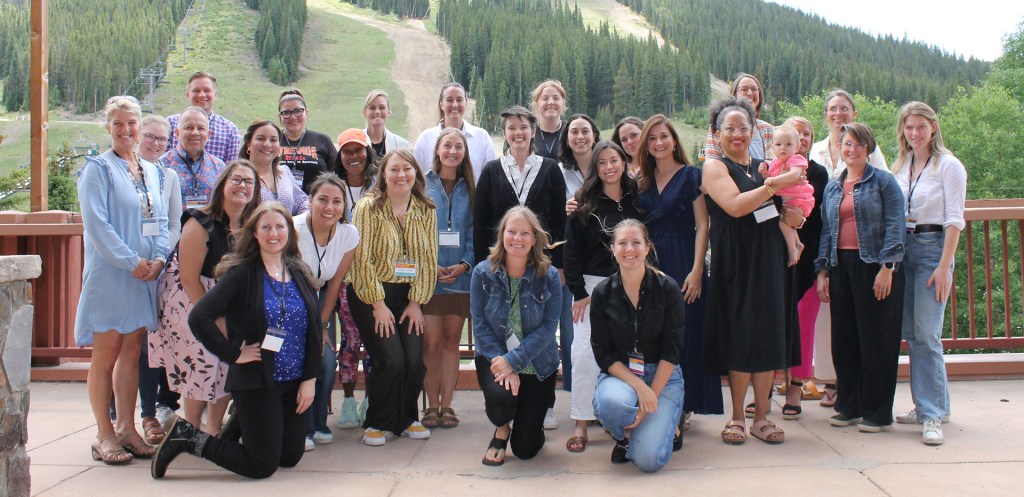
GGSC studies the science of well-being—drawing from psychology, sociology, and neuroscience—and equips communities with practical tools to build a more resilient, compassionate society. Through its Bridging Differences program, GGSC shares research-backed approaches to strengthening dialogue, relationships, and understanding across lines of difference. As Belonging Colorado’s implementation partner, GGSC is helping translate this research into action, working alongside community organizations and leaders across Colorado to apply these tools in real-world community settings. We talked with GGSC’s Bridging Differences Director, Juliana Tafur, and Belonging Colorado Project Manager, Marcy Campbell, about how this work comes to life.
“If we don’t invest in belonging, we risk deepening the isolation, mistrust, and fragmentation that weaken communities.”
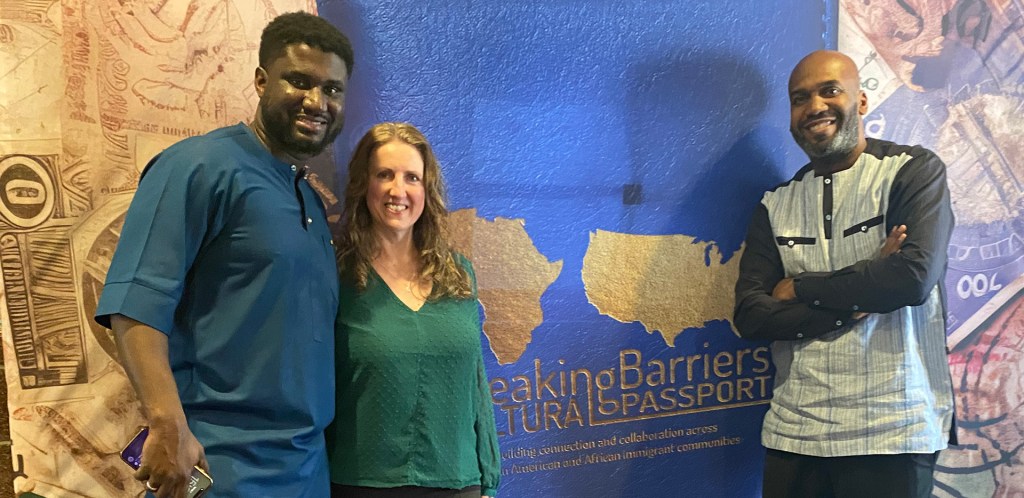
Q: What does your role as Belonging Colorado’s implementation partner look like in practice?
A: We support community organizations and leaders in designing and carrying out high-quality bridging efforts rooted in research and responsive to local needs and strengths. We bring a science-based approach to helping people build connection across differences, and we work alongside community organizations and leadership networks as they translate that research into practice. We provide training on evidence-based bridging skills, create communities of practice where organizations can learn from one another, and offer individual project coaching as they plan, adapt, and navigate challenges. We help partners think about quality and evaluate their work. We support them in designing efforts that do more than bring people into the same room. We help them create the conditions for repeated, meaningful interaction, shared problem-solving, and a stronger sense of belonging.
Q: How do you define belonging, and what helps or hinders it?
A: We think of belonging as the experience of feeling accepted, valued, and connected without having to hide or give up who you are. It is the sense that “I matter here,” “I can contribute here,” and “I do not have to become someone else to be included.” Research suggests that people are more likely to feel belonging when they experience meaningful social connection, encounter cues that they are accepted and valued, and have repeated opportunities to participate with others toward shared goals.
We also know what gets in the way. Isolation gets in the way when people lack opportunities for meaningful interaction across lines of difference. Threat gets in the way when people feel judged, excluded, stereotyped, or unsafe being themselves. And superficial inclusion gets in the way when communities bring people together without taking the time to build the trust and mutuality that deeper belonging requires. We often say the challenge is not difference itself but what unchecked assumptions, fear, and disconnection can do to the way we see one another.
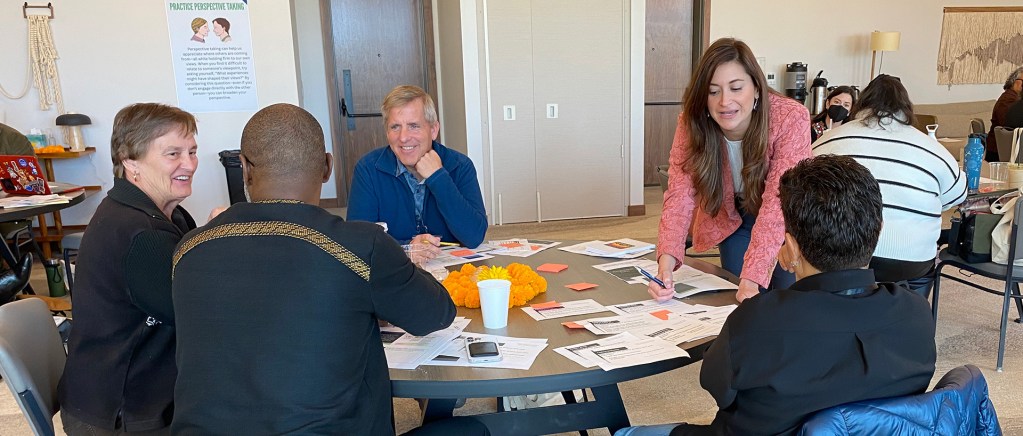
Q: What does it look like to bridge research and real-world applications?
A: At the Greater Good Science Center, bridging research and real-world application means translating science into concrete practices that people and communities can use. Our Bridging Differences Playbook and Bridging Differences in Higher Education Playbook do exactly that: they distill research on what helps people connect across differences and turn it into practical, science-based strategies for individuals, leaders, and organizations. People learn skills such as listening with empathy, seeing the person rather than the label, questioning assumptions, understanding values, and identifying shared goals. Then they have a chance to practice those skills in real situations and think about how to build them into the way they lead and convene others. The approaches we have found most effective are consistent with what research on intergroup contact has shown for decades: designing around the needs and interests of the community, creating repeated and sustained opportunities for interaction, making sure everyone has something to contribute, and inviting people to work together to achieve a shared goal.
Q: What are you seeing across community organizations in Colorado? Are there any standout examples or patterns in how communities are approaching bridging differences?
A: One of the most exciting things we are seeing across Colorado is the range of ways communities are approaching bridging. There is no single template, and that is a strength. The most effective efforts are rooted in the actual needs, relationships, and aspirations of the people involved. We are seeing projects that bring older adults and teens together through cooking, youth from urban and mountain communities together through nature-based activities, multilingual community members together to address local challenges, and people with intellectual and developmental disabilities together with high school students to create a community garden in an area with limited access to fresh produce. What connects these efforts is not just who is participating, but how they are being invited to engage. A standout pattern is that the strongest projects move beyond dialogue alone. Conversation matters, but shared activity often creates the trust that conversation by itself cannot. When people make a meal together, build something together, care for a space together, or tackle a local problem together, they begin to see one another differently. They rely on one another. They contribute as partners. That kind of repeated, active, equal-status engagement is where belonging often starts to deepen.
Q: Without investing in belonging now, what’s at stake—and what gives you hope?
A: If we do not invest in belonging, we risk deepening the isolation, mistrust, and fragmentation that already weaken so many communities. People become more likely to withdraw, stereotype one another, or see difference as a threat. And when that happens, it becomes harder not only to build relationships, but also to solve the very real problems communities face. What gives us hope is that across Colorado, we are already seeing people choose a different path. We are seeing young people, older adults, neighbors, and leaders come together not because their differences disappear, but because they are willing to build something alongside one another anyway. That matters deeply. Belonging does not happen by accident. It grows when we design for it. When we create repeated opportunities for people to contribute, connect, and work across differences around something meaningful, we strengthen not only relationships, but communities.

Juliana Tafur,
Greater Goods Science Center,
Bridging Differences Director

Marcy Campbell,
Belonging Colorado Project Manager